
 Schedule a Service

There is nothing quite like the sinking feeling of walking into your house after a long workday, only to be greeted by a heavy wave of stagnant indoor air because your climate control system decided to quit out of pure spite. Your thermostat is blinking angrily at 82 degrees while you stand there in your work clothes, sweating through your shirt and wondering how a machine you completely ignored for six months has suddenly chosen violence. Living in North Texas means your equipment runs a grueling marathon eight months out of the year, so when mechanical stress finally catches up, finding dependable heating and ac repair frisco becomes your absolute highest priority.
Instead of staring helplessly at your vents or kicking the outdoor unit like an old television set, let’s take a look at why these systems throw dramatic temper tantrums, what’s actually frying behind your drywall, and how to spot trouble before your living room turns into a makeshift sauna.
Key Takeaways
- Extreme Regional Wear: Blistering summers and rapid winter temperature drops force local HVAC systems to endure relentless thermal shock.
- Electrical Vulnerability: Capacitors, contactors, and motor windings love to give up the ghost right in the middle of peak operating seasons.
- Data-Driven Diagnostics: Professional repairs rely on precise electrical and pressure measurements rather than a mechanic with a hunch and a prayer.
- Proactive Interventions: Catching early warning signs like weird noises or weak airflow stops minor hiccups from turning into wallet-draining emergencies.
Article Overview
| Topic / Section | Core Technical Focus | Practical Value for Homeowners |
| Regional Weather Stress | Extreme thermal loads and marathon runtime hours | Explains why local machinery wears down twice as fast as units in mild climates |
| Anatomy of System Failures | Outdoor condensers, evaporator coils, and fried electrical parts | Demystifies the mysterious mechanical noises coming from your utility closet |
| Precision Diagnostics | Multimeter audits, manifold gauges, and pressure checks | Outlines what a technician is actually doing with all those fancy gadgets |
| Maintenance vs. Repair | Filter changes, component lifespans, and professional thresholds | Helps you decide when to grab a new filter versus when to call for backup |
Why Regional Weather Extremes Treat Your HVAC System Like a Punching Bag 🌡️
Picture your AC unit clocking into a 16-hour shift every single day in July. It’s 102 degrees outside, the sun is baking your roof shingles until they are practically radiating heat, and your outdoor condenser is screaming for mercy while trying to shove indoor heat out into an atmosphere that feels like a convection oven. Then January rolls around with a random 20-degree arctic blast, forcing your furnace to leap from total hibernation straight into full-blast heating overnight. That kind of seasonal whiplash accelerates wear on moving parts and electrical contacts faster than almost anything else.
Understanding how exterior weather punishes your outdoor hardware naturally leads us to examine the specific internal parts that tend to wave the white flag first.
What Are the Core Electrical and Mechanical Parts Failing Inside Your Cabinet? ⚙️
Most homeowners treat their climate control setup like a magic box: you push a button, and cool air magically appears. But when you hear that tragic hum—the sound of a compressor trying to start, failing, and making a sad electrical buzzing noise like a dying lawnmower—you realize magic has nothing to do with it. Inside those metal boxes, a few hard-working components bear all the weight:
- Dual-Run Capacitors: These little cylindrical batteries give your motors their initial kick-start. When your 140-degree attic bakes them all summer, their internal fluid boils away, leaving your fan or compressor humming helplessly.
- High-Voltage Contactors: The electronic switches that tell your system to turn on. Every time they close, tiny electrical sparks pit the metal contacts until electricity can’t pass through anymore.
- Evaporator Coils: If a dirty filter chokes off your airflow, your indoor coil freezes solid into a giant block of ice, turning your air handler into an accidental snow cone machine.
Knowing what’s frying in your attic is half the battle, but figuring out how professionals isolate those failures requires more than just a flashlight and a lucky guess.
How Professional Diagnostics Cut Through the Guesswork 🔍
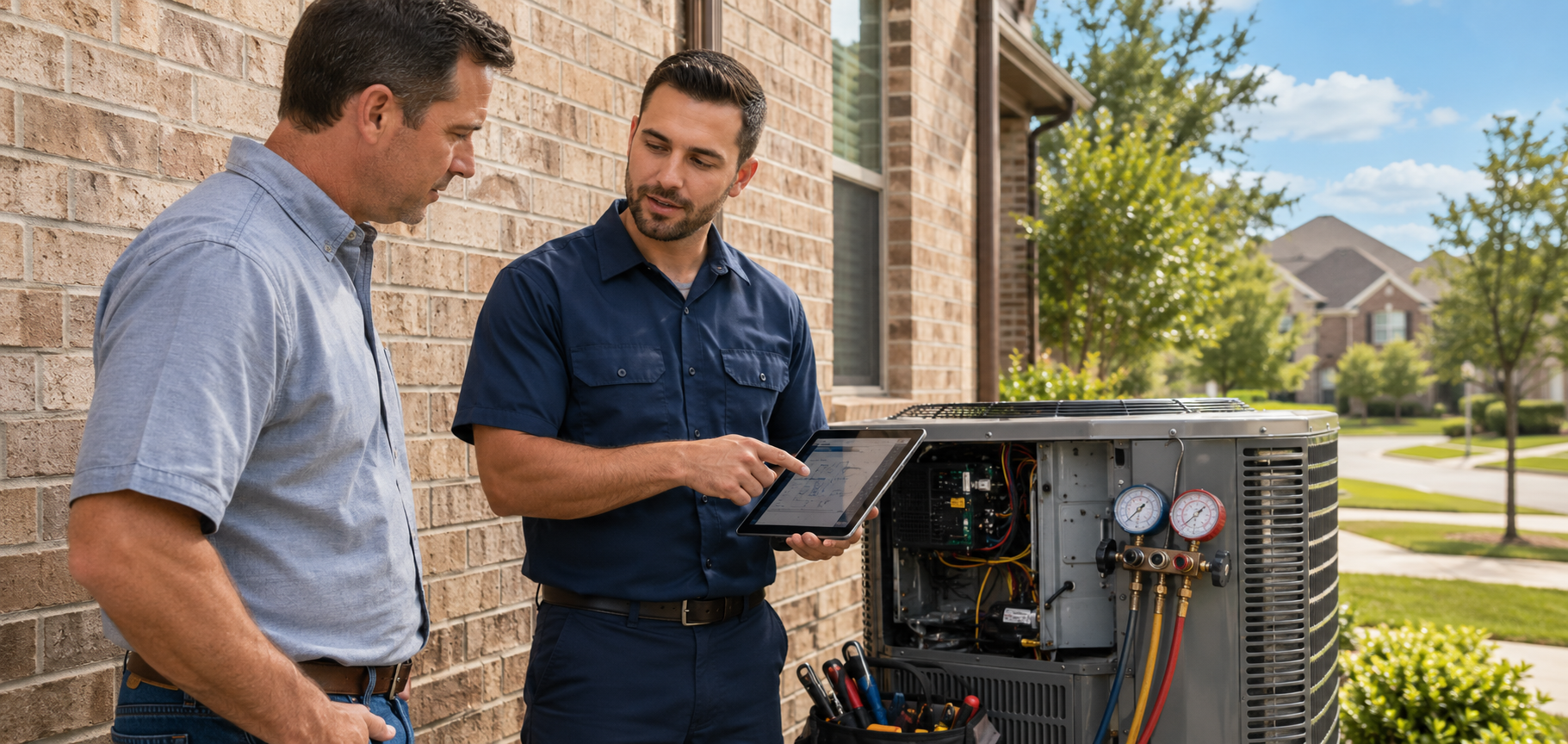
Remember that well-meaning neighbor who insists he can fix your entire HVAC system with a butter knife and a roll of duct tape? Yeah, don’t do that. When a licensed technician shows up for a service call, their approach is rooted in actual engineering, following a strict investigative sequence:
- True RMS Amperage Auditing: Technicians clamp a meter onto the power leads to measure running load amps. If a motor is pulling too much juice, it tells them the internal bearings are binding up long before it completely smokes out.
- Manifold Gauge Analysis: Hooking digital gauges to the service ports lets them read exact pressures. This is how they catch hidden refrigerant leaks or restricted filter driers without having to slice open your copper lines blindly.
- Static Pressure Testing: Measuring how hard your blower motor has to work to push air through your ductwork, exposing hidden blockages or undersized returns.
Even with advanced diagnostic tools at hand, keeping your system humming along smoothly relies on understanding where routine homeowner upkeep ends and expert service begins.
Homeowner Upkeep Versus Professional Repairs: Where Do You Draw the Line? 📊
Maintaining a healthy indoor climate requires a realistic partnership between everyday homeowner chores and advanced technical muscle. Knowing where your responsibilities stop saves you from wasting money or breaking something expensive:
| Maintenance Level | Responsibilities & Actions | Who Handles It |
| Homeowner Upkeep | Swapping 1-inch air filters every 30–60 days, keeping landscaping two feet away from the outdoor unit, and keeping floor vents clear of area rugs. | You (The Homeowner) |
| Professional Service | Measuring electrical amp draws, calculating superheat values, tracking down refrigerant leaks, and testing combustion safety limits. | Licensed HVAC Technicians |
While swapping out a clogged filter keeps everyday airflow restrictions at bay, complex electrical and pressurized refrigerant work demands professional licensing and specialized gear.
Once you’ve got your monthly filter routine locked down, the final step is knowing who to call when things still go sideways.
What to Look for When Choosing a Contractor for Heating and AC Repair Frisco 🤝
The local service market is packed with options, but finding a company you can actually trust with your house keys comes down to evaluating three essential standards:
- State Licensing Compliance: Always make sure your contractor carries an active license with the Texas Department of Licensing and Regulation (TDLR) so you know they follow state safety codes.
- Upfront Flat-Rate Pricing: Look for straightforward pricing given before any wrench turns, saving you from getting ambushed by mystery hourly labor fees on your bill.
- Root-Cause Fixes: Elite providers focus on repairing the actual mechanical trigger of the failure rather than just slapping a temporary band-aid on a symptom that will break again next month.
Establishing a relationship with an honest, local team keeps your equipment history documented and your stress levels low when the weather gets wild.
Rescue Your Home From Indoor Sauna Status Today 🚀
Life moves way too fast to spend your evenings wrestling with a stubborn thermostat or sweating over whether your AC will survive the weekend. When your system starts acting up, partnering with a seasoned local crew makes all the difference. ClassicABC Heating & Air brings 40+ years of Master-licensed field experience (TACLB00005952C) straight to your front door, delivering honest diagnostics and permanent solutions without any high-pressure sales pitches. We provide Same-Day Priority Dispatch, transparent flat-rate pricing, and our signature Drop-Cloth Clean Guarantee to protect your floors.
- Claim $25 OFF your initial diagnostic or repair service call.
- Take 10% OFF total repairs for Veterans, Seniors, and Teachers.
Call our local dispatch team right now at 214-310-2665 or email service@classicheatandair.com to schedule your trusted heating and ac repair frisco appointment today!
Frequently Asked Questions About HVAC Repairs ❓
How often should my home’s HVAC system be serviced in North Texas?
Residential systems in Frisco require professional service twice a year—cooling diagnostics in the spring and heating safety inspections in the autumn—to properly manage extreme seasonal temperature shifts.
Does regular maintenance really lower my monthly utility bills?
Yes. Clean coils, precise refrigerant charges, and optimized electrical connections reduce the electrical amperage your system draws, directly translating to lower monthly energy consumption.
What is the most common reason an air conditioner stops working during summer?
A failing dual-run capacitor is the most frequent culprit. Extreme summer heat and heavy electrical loads cause these internal energy cylinders to overheat and lose their ability to hold a charge.
Why is my upstairs always hotter than my downstairs during summer?
Warm air naturally rises, and second-story rooms absorb massive amounts of radiant heat directly from the attic roof deck. If your duct design lacks balanced airflow or proper static pressure, upstairs vents cannot deliver enough volume to overcome that heat load.