
 Schedule a Service

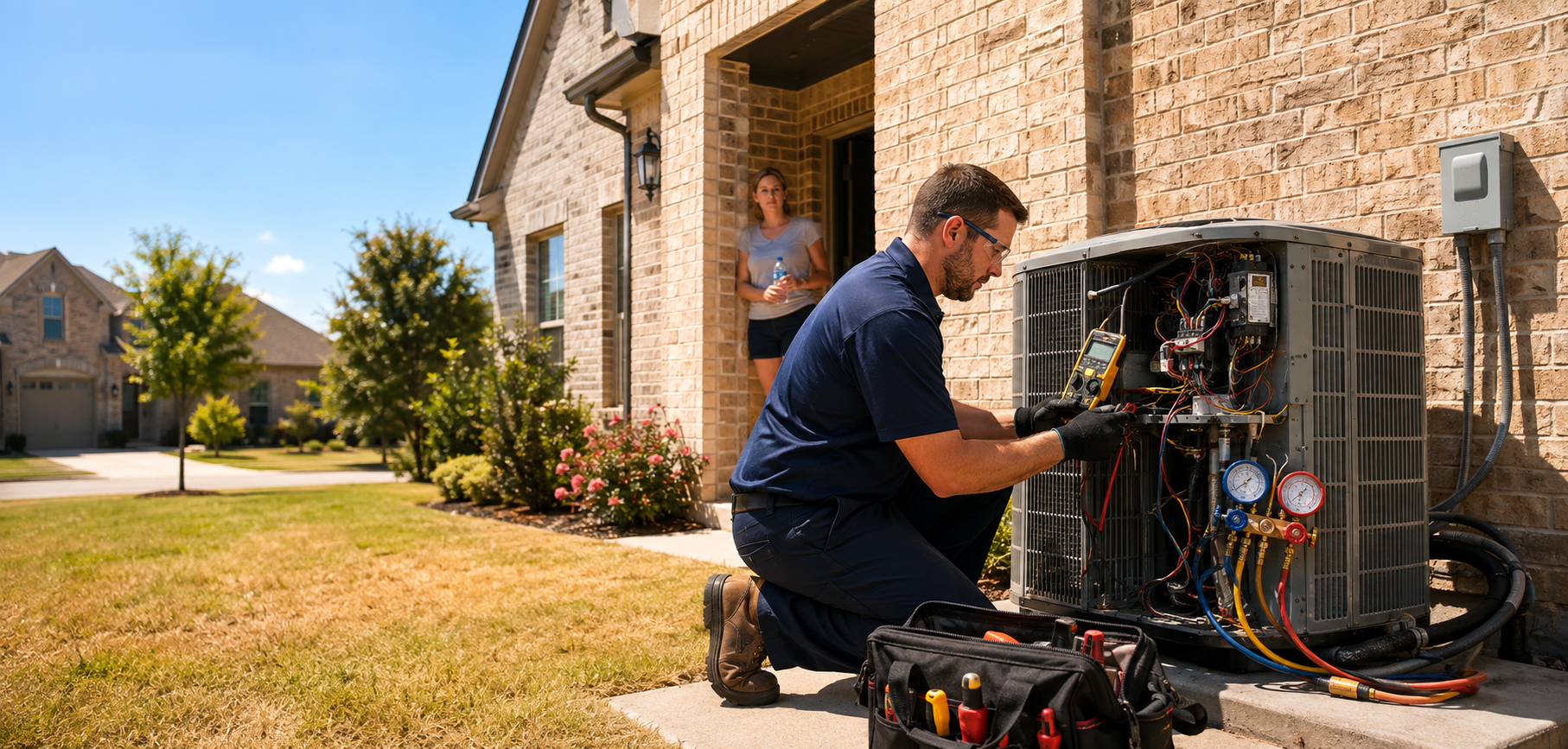
When a residential air conditioning system fails during a 105°F North Texas summer afternoon, the indoor environment shifts from comfortable to hazardous within hours. Without functional cooling, indoor temperatures spike rapidly, turning living spaces into oppressive heat traps. When you need fast Emergency AC Repair in Frisco, a sudden breakdown demands quick action: safely troubleshooting minor issues, understanding mechanical failure points, and evaluating emergency service options without falling for inflated fees.
Key Takeaways
- Rapid Heat Risks: Indoor temperatures can climb past 90°F in under an hour during Texas heatwaves, making thermal safety priority number one.
- Troubleshooting Limits: Checking breakers, filters, and thermostat batteries resolves basic issues, but internal electrical failures require professional intervention.
- Common Culprits: Blown capacitors, frozen evaporator coils, and clogged drain lines cause over 80% of sudden summer shutdowns.
- Transparent Standards: Legitimate emergency technicians provide upfront flat-rate pricing rather than surprise overtime fees or pushy sales tactics.
Article Overview
| Topic / Section | Core Technical Focus | Practical Value for Homeowners |
| Emergency AC vs. Routine Service | Thermal safety thresholds, heat gain, and high-risk health factors | Helps identify when a breakdown requires priority dispatch |
| First-Response Checklist | Thermostat resets, breaker panel checks, filter swaps, and float switches | Prevents unnecessary service calls from minor external issues |
| Top 5 Summer Meltdown Causes | Capacitor blowouts, frozen coils, clogged drain lines, and contractor arcing | Explains the mechanical failures causing sudden shutdowns |
| Safety Protocols for Extreme Heat | Cross-ventilation, zone cooling, hydration, and temporary relocation | Keeps your family and pets safe while waiting for technician arrival |
| Evaluating Emergency Estimates | Technical industry standards, diagnostic rigor, and red flags | Protects your home from rushed decisions and unnecessary replacements |
Why an AC Breakdown in Frisco Is a True Emergency 🌡️⚠️
When an air conditioner fails in a mild climate, it is an annoyance. When it fails in Frisco during peak summer, it is an urgent crisis. Modern Texas homes feature soaring ceilings and heavy insulation designed to trap heat. During a summer breakdown, that structural envelope acts like an oven, trapping radiant solar heat inside.
Within two hours of a total shutdown, indoor temperatures can jump from 72°F to a dangerous 92°F. High humidity prevents sweat evaporation, accelerating dehydration. For children, elderly relatives, and pets, rapid heat buildup poses genuine health risks like heat exhaustion. Recognizing these pressures helps you act before conditions deteriorate.
The 10-Minute Homeowner First-Response Checklist 🛠️
Before calling an emergency dispatcher, work through these simple troubleshooting steps to rule out minor external issues:
1. Check the Thermostat Screen & Batteries
A blank screen often indicates dead batteries or a tripped float switch. Replace the batteries and verify the system is set to COOL with the fan on AUTO.
2. Inspect the Main Electrical Breaker Panel
Extreme heat causes compressors to draw high amperage, which can trip breakers. Locate your electrical box, find the dual-pole AC breaker, switch it firmly to OFF, and back to ON. If it trips instantly, stop—you have an electrical short.
3. Examine Your Air Filter
A choked filter starves the system of return air, dropping static pressure and causing the indoor evaporator coil to freeze solid. If your filter looks like a dirty blanket, remove it immediately.
4. Inspect the Condensate Drain Line & Float Switch
Algae clogs can back up condensate lines, tripping safety float switches that cut power to the outdoor compressor to prevent ceiling water damage.
Top 5 Causes of Mid-Summer AC Breakdowns in Frisco
Air conditioners break down when thermal stress reaches its peak. Here are the five most common culprits behind sudden failures:
- Blown Dual-Run Capacitors: Attic heat bakes these cylindrical startup components, causing them to bulge, leak, and fail under heavy electrical load.
- Frozen Evaporator Coils: Restricted airflow or low refrigerant drops surface temperatures below 32°F, turning ambient moisture into an ice barrier.
- Pitted Contactor Points: Constant high-voltage cycling causes electrical arcing, pitting the contactor points and cutting power to the compressor.
- Clogged Condensate Drain Lines: Heavy North Texas humidity produces gallons of water daily, forming biological sludge that clogs drain lines and trips safety switches.
- Thermal Overload Cut-Outs: Choked outdoor condenser coils trap heat, causing internal head pressure to skyrocket and trip the compressor’s thermal overload switch.
How to Stay Cool While Waiting for Emergency Service 🧊🏠
While waiting for priority dispatch, manage indoor thermal safety with these practical steps:
- Seal Unused Spaces: Close doors to guest rooms and laundry areas to concentrate remaining cool air into your primary living zone.
- Block Solar Heat: Draw all blinds and heavy drapes, especially on south- and west-facing windows absorbing intense sunshine.
- Limit Heat Generation: Avoid using ovens, dishwashers, and clothes dryers, which dump unnecessary heat into your home.
- Use Ceiling Fans Wisely: Run ceiling fans counter-clockwise to create a wind-chill effect. Turn them off in empty rooms since fans cool people, not spaces.
- Hydrate & Relocate Vulnerable Family Members: Drink cold water continuously. If indoor temperatures exceed 88°F, consider moving infants, elderly relatives, or pets to an air-conditioned space temporarily.
How to Evaluate Emergency Repair Estimates 💸
When indoor temperatures climb past 90°F, stress makes homeowners vulnerable to inflated fees. Knowing proper technical standards helps you spot red flags:
| Evaluation Metric | Technical Industry Standard | Red Flags to Watch For |
| Pricing Transparency | Upfront flat-rate diagnostic fee before testing, with itemized parts and labor quotes. | Vague hourly rates, hidden trip fees, or surprise “after-hours multipliers.” |
| Diagnostic Rigor | Complete multi-meter electrical test (RLA/LRA), refrigerant check, and static pressure test. | A quick visual glance followed by an immediate claim that the system is “dead.” |
| Component Quality | Heavy-duty OEM or high-grade dual-run capacitors and motors with clear parts warranties. | Low-grade, unbranded components with massive markups and zero written coverage. |
| Repair vs. Replace Logic | Isolating minor electrical failures (capacitors, relays, drain lines) and explaining the root cause. | Pushing an immediate full system replacement on a unit that is only a few years old. |
If a service visit results in an immediate recommendation to replace a relatively young system during a weekend call, request a written diagnostic breakdown. Usually, replacing a blown capacitor or clearing a drain line restores cooling instantly.
Ready to Restore Cool Air to Your Home Right Now? 🚀
Don’t wait for indoor temperatures to reach unsafe levels. Whether you need an urgent electrical diagnostic, component replacement, or professional airflow testing, ClassicABC Heating & Air brings 40+ years of Master-licensed field experience (TACLB00005952C) directly to your home. We provide Same-Day Priority Cooling Dispatch, transparent flat-rate pricing, and a Drop-Cloth Clean Guarantee.
- Claim $25 OFF your initial diagnostic service call.
- Take 10% OFF total repairs for Veterans, Seniors, and Teachers.
Call our local dispatch team right now at 214-310-2665 or email service@classicheatandair.com to schedule your emergency service today!
Frequently Asked Questions About Emergency AC Repair
What qualifies as a true AC emergency in Frisco, TX?
A true emergency happens when outdoor temperatures exceed 90°F and cooling stops completely, or when an aging system exhibits burning smells, electrical sparking, or active water leaks.
How long does a frozen evaporator coil take to thaw?
A frozen coil takes 2 to 6 hours to thaw. Switch your thermostat from COOL to OFF and set the fan to ON to circulate room-temperature air across the coil.
Why is my AC running, but blowing warm air?
Warm air usually means the indoor blower is running while the outdoor condenser has shut down due to a blown capacitor, tripped high-pressure switch, or low refrigerant.
Should I turn my AC off if it stops cooling?
Yes. Turning the thermostat to OFF prevents compressor motor windings from overheating and turning a minor electrical fix into a costly overhaul.