Schedule a Service


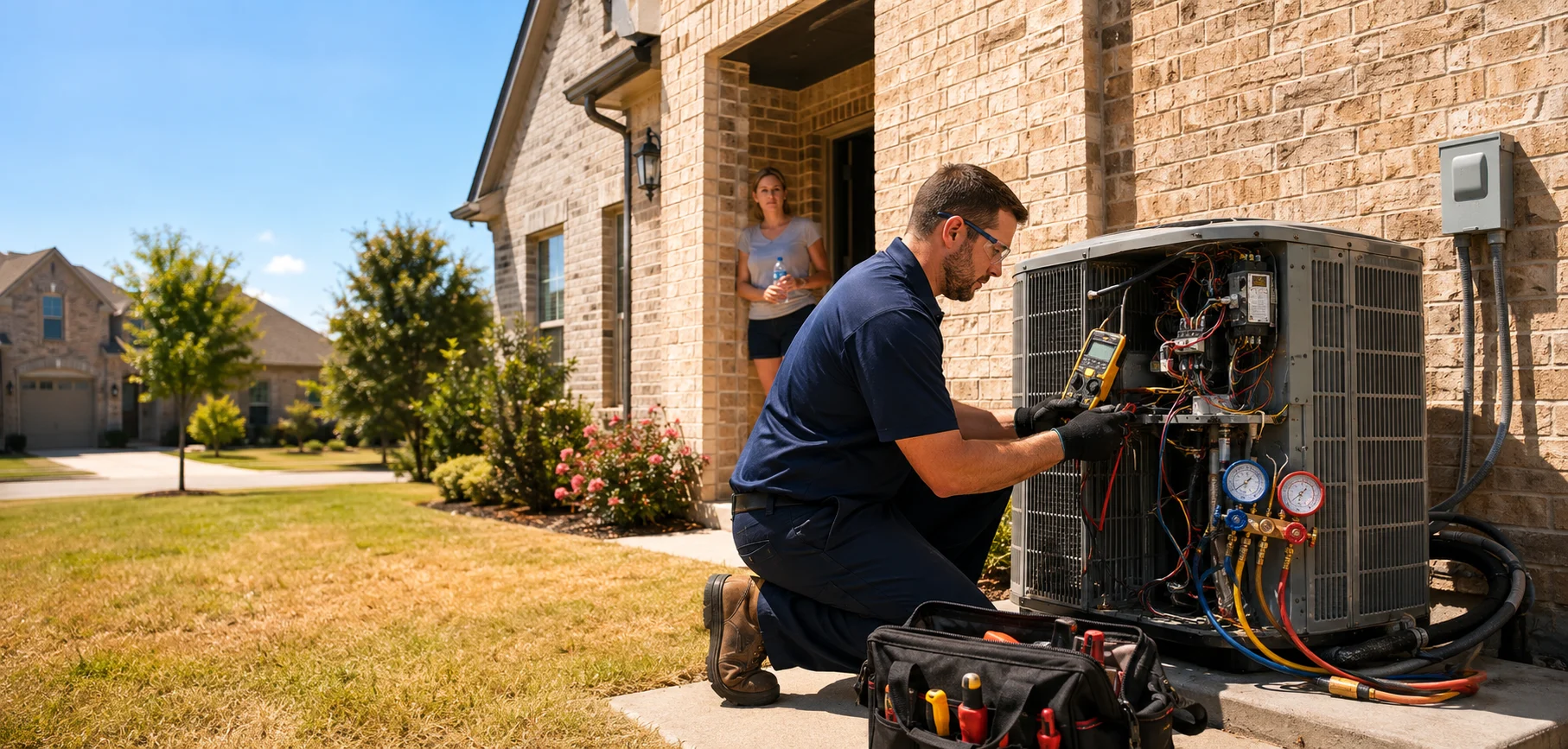
It is 7 p.m. on a 103°F Sunday, the kids are trying to fall asleep upstairs and the air coming out of the bedroom vent has gone from cool to warm to something that feels like a hair dryer on low. Or it is a January night, the forecast says 19°F and the furnace has stopped making any sound at all. Either way, the question is the same: what do you do right now?
In this guide, we will explain what counts as a true HVAC emergency, the steps to take in the first 30 minutes, what you can safely check yourself, how to keep your family comfortable while you wait and what happens when a technician arrives. HVAC systems seem to choose the hottest and coldest nights to fail, because that is when they are working hardest. A calm plan protects your family, protects the equipment and often shortens the repair.
Is It an Emergency?
| Situation | Emergency? | What to Do |
|---|---|---|
| Gas smell or CO alarm | Yes, safety emergency | Leave the home and call 911 or the gas utility |
| Burning or electrical smell | Yes | Turn the system off and call |
| No cooling during extreme heat | Often, especially with vulnerable family members | Do safe checks, then call |
| No heat during a freeze | Often | Do safe checks, protect pipes, then call |
| Water leaking through a ceiling | Yes, property damage | Turn the system off and call |
| System running but not keeping up | Usually not | Schedule a next-day appointment |
Key Takeaways
- Gas smells, carbon monoxide alarms, burning smells and water near electrical parts always come first.
- A few safe checks, such as the thermostat, breakers, filter and drain pan, can solve some emergency calls in minutes.
- Turning the system off when it is frozen, leaking or humming without running prevents more expensive damage.
- Having clear information ready when you call helps the technician arrive prepared.
What Does Emergency HVAC Service Cover?
- No Cooling: Failed capacitors, contactors, fan motors, frozen coils and refrigerant problems.
- No Heat: Igniter and flame sensor failures, gas valve problems, inducer motors and safety lockouts.
- Electrical Failures: Tripped breakers, blown fuses, failed transformers and burned wiring.
- Water Leaks: Clogged drains, overflowing pans and float switch shutdowns.
- Safety Concerns: Burning smells, venting problems and suspected combustion issues once the home is safe.
5 Steps for the First 30 Minutes
1. Minutes 0 to 5: Rule Out Safety Problems
If you smell rotten eggs or sulfur or your carbon monoxide alarm sounds, get everyone outside and call 911 or the gas utility. If you smell smoke or burning, turn the system off and do not restart it. If water is near electrical parts, turn the system off at the thermostat and the breaker.
2. Minutes 5 to 15: Do the Simple Checks
Check the thermostat mode, setpoint and batteries. Look for a tripped breaker and reset it once. Make sure the furnace or air handler switch is on, replace a clogged filter and look for water in the drain pan.
3. Minutes 15 to 25: Protect the Equipment
If lines or the coil are iced, turn cooling off and run the fan to thaw. If the outdoor unit hums without the fan turning, switch it off. Do not keep resetting breakers or remove panels.
4. Minutes 25 to 30: Make the Call
Have ready what the system is doing, when it stopped, what you checked, any smells, water or noises and the approximate age of the system. Mention anyone at home who is vulnerable to heat or cold.
5. While You Wait: Keep Comfortable
In summer, close blinds, use fans, stay hydrated and move vulnerable family members to the coolest room or a cooler location. In winter, close curtains, layer up, gather in one room and let faucets drip during a hard freeze. Never use a gas oven or grill for heat.
Common Emergencies and Likely Causes
| What Happened | Likely Cause | What the Technician Checks |
|---|---|---|
| Outdoor unit silent, indoor fan running | Capacitor, contactor, breaker | Electrical components, power supply |
| Outdoor unit humming, fan not spinning | Failed capacitor or fan motor | Capacitor rating, motor |
| Whole system dead | Float switch, fuse, transformer | Drain, low-voltage circuit, board |
| Furnace clicks, no flame | Igniter, flame sensor | Ignition sequence, flame signal |
| Breaker trips repeatedly | Compressor or motor short | Amp draw, windings, wiring |
Why HVAC Emergencies Hit Carrollton Homes Hard
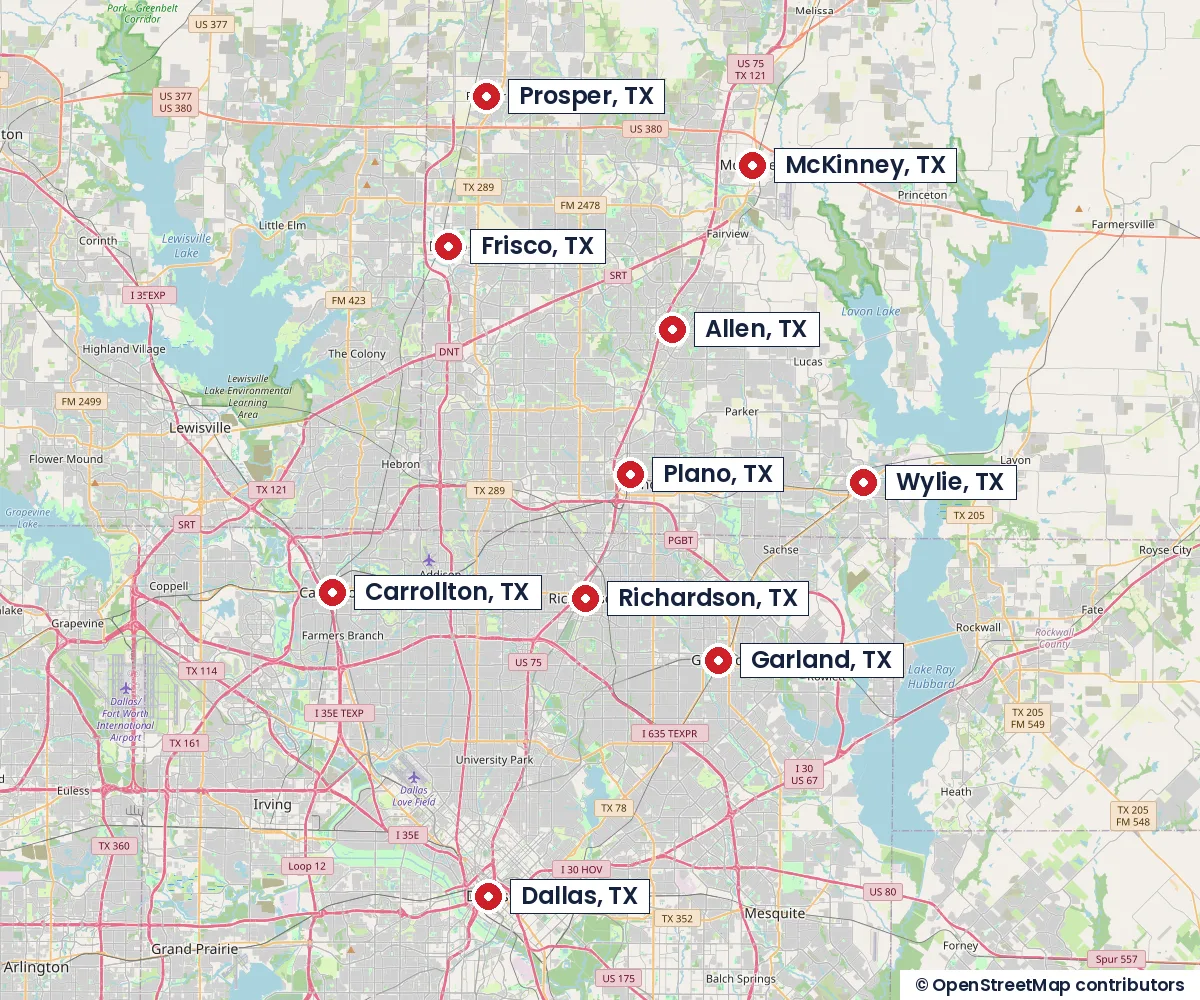
Carrollton summers push air conditioners to run nearly nonstop for weeks, and attic temperatures above 120°F wear down capacitors, motors and wiring. Winter is short, but hard freezes arrive quickly and test furnaces and heat pumps that have sat idle for months. Many homes from the 1970s through the 1990s also have attic equipment where a clogged drain can send water straight through the ceiling. Those conditions make a little preparation worth it: knowing where your breaker, filter and furnace switch are can save time when it counts.
What Not to Do in an HVAC Emergency
- Do not reset breakers repeatedly: A breaker that trips again is protecting your equipment.
- Do not run a frozen system: It can damage the compressor.
- Do not open panels: High voltage and gas components are inside.
- Do not add refrigerant or adjust gas valves: These are licensed tasks.
- Do not use unsafe heat sources: Gas ovens and outdoor heaters can create carbon monoxide.
Repair Now or Plan for Replacement?
| Factor | Repair Tonight Makes Sense | Talk About Replacement |
|---|---|---|
| Failure | Capacitor, contactor, igniter, drain | Compressor, heat exchanger |
| Age | Under 10 to 12 years | Over 15 years |
| History | First breakdown in years | Repeated emergencies |
What Happens When the Technician Arrives?
- Quick Briefing: You share what happened and what you already checked.
- Safety Check: Electrical, gas and water concerns are addressed first.
- Diagnosis: The failed component is found and confirmed.
- Price Before Work: You approve the repair before it begins.
- Restore and Verify: The system runs a full cycle to confirm it is working safely.
Specials
New ClassicABC customers save \$25 on any new client service, and veterans, senior citizens and teachers save 10%. If an emergency turns into a replacement, ask about up to \$1500 off new A/C systems.
Sweating Through the Night or Shivering Under Blankets?
When the system quits, you want a clear answer and a plan. ClassicABC Heating & Air helps Carrollton homeowners get comfortable again, backed by over 40 years of industry experience, with fast triage, clear diagnosis and pricing before work. Call ClassicABC at 214-310-2665 for emergency HVAC service in Carrollton, TX, or book online for non-urgent service.
Frequently Asked Questions About Emergency HVAC Service in Carrollton, TX
When is an HVAC failure an emergency?
When the home is becoming unsafe from heat or cold, when there is a gas or burning smell, or when water is causing damage.
What should I check before calling?
Check the thermostat, breakers, furnace switch, air filter and drain pan.
Should I keep running my AC if it is frozen?
No. Turn cooling off and run the fan to thaw it. Running it frozen can damage the compressor.
What should I do if I smell gas?
Leave the home without flipping switches and call 911 or the gas utility from outside.
How can I protect my pipes if the heat goes out in a freeze?
Let faucets drip, open cabinet doors under sinks and keep the home as warm as safely possible until the heat is restored.
Can an emergency repair be done in one visit?
Many common failures, such as capacitors, contactors, igniters and clogged drains, can be repaired during the first visit.