Schedule a Service


When it is time for a new furnace, most McKinney homeowners face the same first question: a standard-efficiency furnace or a high-efficiency condensing model? The answer affects more than the yellow energy label. It changes how the furnace vents, whether it needs a drain, where it can go and how it behaves during a hard freeze in an attic.
This guide walks through the choice, the installation details that matter in North Texas homes and the questions to ask before you sign off on a new furnace.
Standard vs. High-Efficiency Furnaces at a Glance
| Feature | Standard-efficiency furnace | High-efficiency condensing furnace |
|---|---|---|
| How it vents | Metal flue through the roof | PVC pipes, often through a wall or roof |
| Produces condensate | No | Yes, needs a drain |
| Upfront cost | Lower | Higher |
| Operating cost | Higher gas use per unit of heat | Lower gas use per unit of heat |
| Attic considerations | Simpler | Drain line and freeze protection needed |
Why Efficiency Matters Less Here Than Up North, and Why It Still Matters
McKinney winters are short and mostly mild compared with northern states. Fewer heating hours means the savings from a high-efficiency furnace add up more slowly. On the other hand:
- Hard freezes like February 2021 can make a furnace run for days straight.
- Many homes use gas for heat for several months each year.
- High-efficiency furnaces often come with variable-speed blowers that improve comfort and airflow year-round, including for air conditioning.
The right choice balances upfront cost, how long you plan to stay and how much you value quieter, more even heat.
What Changes When the Furnace Is in the Attic
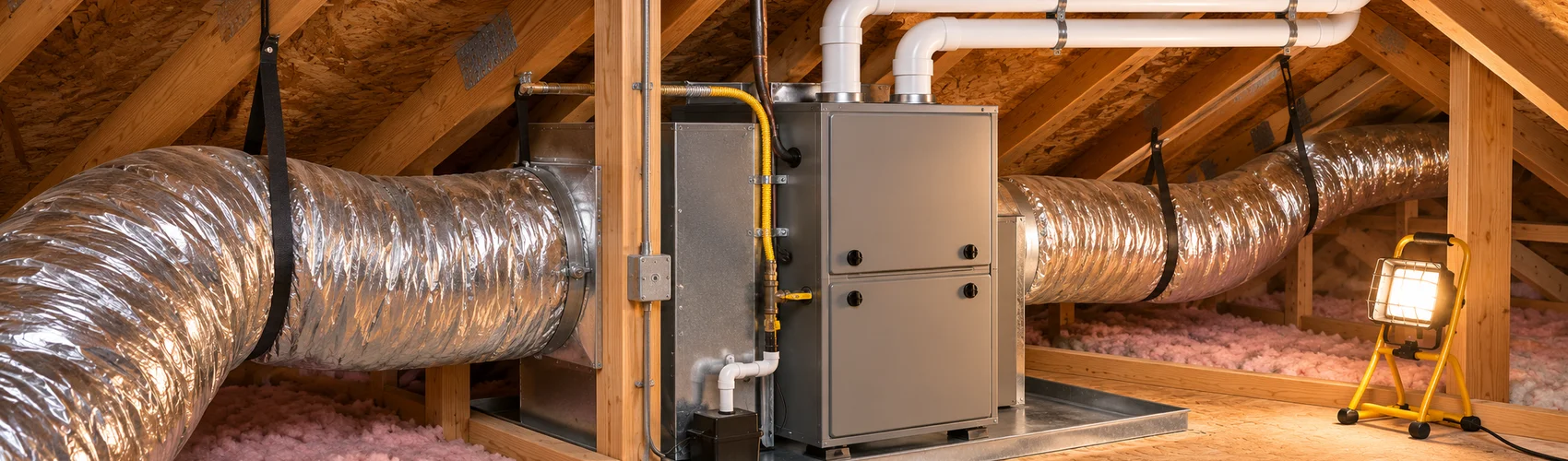
Most McKinney homes put the furnace in the attic. That location shapes the installation.
Venting
Standard furnaces need a properly sized metal flue with correct clearances. Condensing furnaces use PVC intake and exhaust pipes that must be routed and terminated correctly.
Condensate Drainage
High-efficiency furnaces produce water that has to drain away. In an attic, that means a properly sloped line, a trap and a plan to keep it from freezing during cold snaps.
Drain Pan and Safety Switch
A secondary drain pan under the furnace and air conditioner coil, with a float switch, helps protect the ceiling below if a drain clogs.
Access and Platform
The furnace needs a solid platform, a walkway and enough clearance for future service.
Sizing a Furnace Correctly
An oversized furnace heats the house in short bursts and shuts off, which can create hot and cold swings and extra wear. An undersized one runs constantly on the coldest nights. Proper sizing looks at insulation, windows, square footage, layout and ductwork rather than simply matching the old furnace.
Matching the Furnace to Your Air Conditioner
The furnace blower moves air for both heating and cooling. When installing a new furnace, make sure:
- The blower can deliver the airflow your air conditioner needs.
- The indoor coil fits and matches the outdoor unit.
- The thermostat supports any staging features.
If your AC is also aging, replacing both together often makes sense.
Signs It Is Time for a New Furnace
- The furnace is near the end of its expected life
- Repairs are becoming frequent
- A technician found a cracked heat exchanger or serious venting problem
- Rooms heat unevenly or the furnace short cycles
- Gas bills keep rising without a change in habits
What a Quality Furnace Installation Includes
- Load-based sizing
- Correct venting for the furnace type
- Gas connection and leak testing
- Condensate drain and freeze planning for condensing models
- Drain pan and float switch where required
- Duct connections sealed at the furnace
- Startup testing of ignition, flame, safeties and airflow
- A walkthrough of thermostat settings and filter changes
Installations may require a city permit. ClassicABC does not provide electrical services, so any panel or circuit work is coordinated separately.
Questions to Ask Before You Choose
- Is a standard or high-efficiency furnace better for how long I plan to stay?
- How will the venting and drainage be routed in my attic?
- Does the blower match my air conditioner?
- What warranty comes with the furnace and the labor?
- What maintenance will the furnace need?
Install Your New Furnace With ClassicABC
ClassicABC Heating & Air brings over 40 years of industry experience to furnace installation in McKinney homes, from historic houses near downtown to two-story homes in newer neighborhoods.
- Honest guidance on standard vs. high-efficiency options
- Upfront pricing before any work begins
- Financing for eligible customers and 10% off for veterans, senior citizens and teachers on eligible services
Call 214-310-2665 or request a furnace estimate online. Learn more about heating installation and replacement in McKinney.
Frequently Asked Questions About Furnace Installation in McKinney, TX
How long does a furnace installation take?
A straightforward replacement is often completed in a day. Venting changes or added work can take longer.
Is a high-efficiency furnace worth it in North Texas?
It depends on how long you plan to stay and your comfort priorities. We can compare both for your home.
Can a condensing furnace go in my attic?
Yes, with proper drainage, freeze planning and a drain pan.
Should I get a heat pump instead?
A heat pump or dual fuel system can be a good fit. We can explain the trade-offs.
Do I need a permit?
A new furnace installation may require a city permit.